


Hi there, housemates,
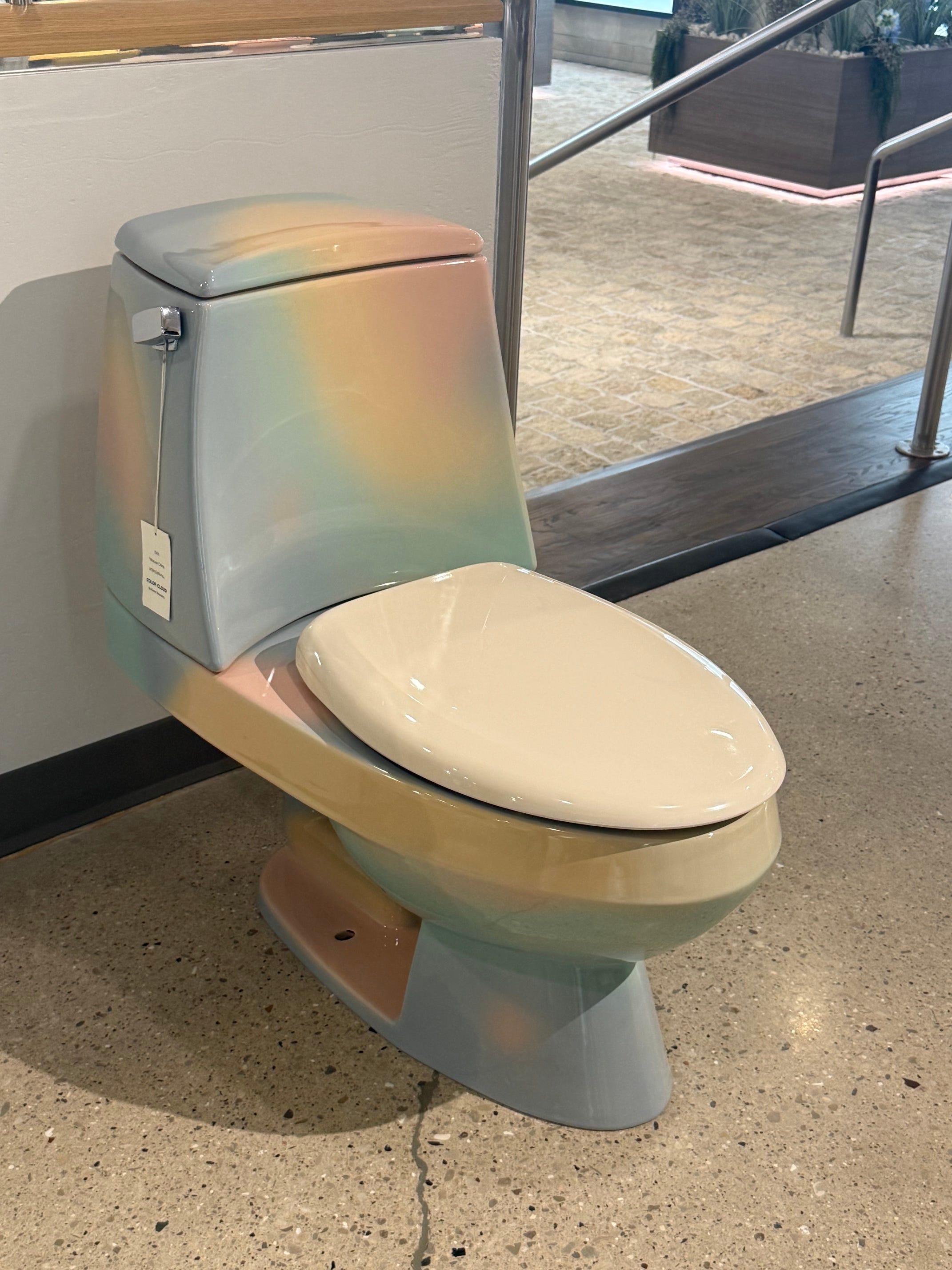
I’m writing you this week from sunny Wisconsin, where I have been exploring the Kohler factory and archives for the past two days. This one definitely deserves its own report, so I’ll save most of my comments for there. But I will tease you with this—the Color Cloud toilet from 1985, a Polly Pocket fantasy I am begging the Kohler team to bring out of retirement!:
Anyway. This week’s article, “Letting Go of the Rest,” is a personal essay by Helena Madden. I first met Helena—and have seen her many times over the years since—at design “market” showcases: tile shows, furniture fairs, brand dinners, and so on. As a writer, historically, her remit has been to cover what’s new. But the novelty of something, of course, is only a part of the story when it comes to the spaces we live in. In today’s tale, that newness enters the frame through a basement renovation her parents carried out during her adolescent years. Below, Helena reaches deep into the couch cushions to pull out some loose change around identity, class, and coming of age in the Midwest.
—Lila Allen
⌂ ⌂ ⌂
Like what you see here? Want to support independent design media? Wrong House compensates its contributors, and your support goes directly toward producing more stories. Please consider becoming a paid subscriber.

By Helena Madden
When I was in the fifth grade, my parents announced their plans to renovate the basement. They had bought our square-shaped St. Louis home in the ’90s, a year or two before I was born. At the time, they had grand plans for it, but raising two young girls solely on my father’s professor salary didn’t leave them with much extra cash for an ambitious remodel.
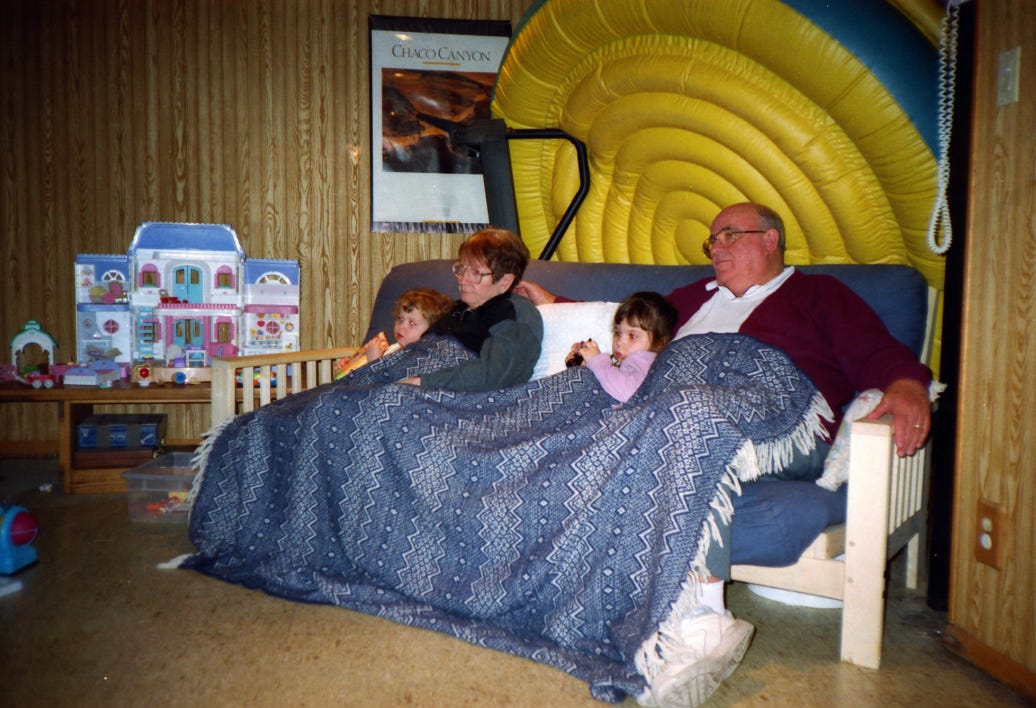
As the years passed and finances steadied, my mom began working part-time again, which meant it was finally time to reimagine the basement that they’d grown to resent, with yellow-brown wood that clad just about every wall. My mother said it felt embarrassingly stuck in the ’70s, and made the already-old house look even older. They hated the worn-down blue futon that let out a loud creak whenever you sat on it. What they imagined in its place was a cleaner, beige-and-white design—with an added bathroom where my dad could get ready for work or daily Mass in the wee hours of the morning. A sanctuary, you could say.
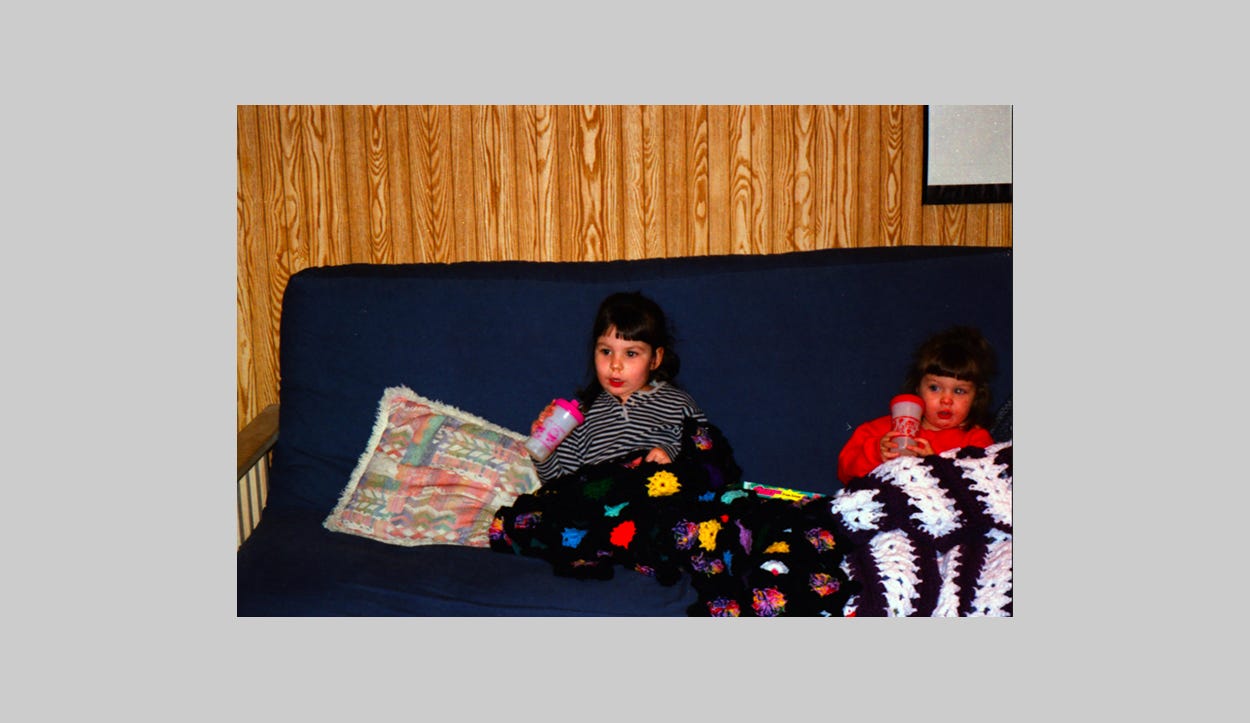
I disagreed, not caring much about the supposed aesthetic or functional upgrades—for me, the basement was an all-important dumping ground for my favorite toys. It was where my sister, Melinda, stashed her pastel dollhouses, and where I would hop aboard my enormous plastic rocking horse for a mid-afternoon joyride, galloping with a squeak even louder than the futon.
It was where Melinda, two years my junior, discovered the wonder of television. We spent months living abroad in a woefully TV-less Venice apartment when she was less than a year old. By the time we returned to St. Louis—or “the big house,” as I called it as a toddler—I was very eager to watch my favorite shows again. My mom put on a Teletubbies cassette, and our miniscule television sparked to life. Mel waddled toward it rapturously, arms outstretched, like Carol Anne from Poltergeist. It was as if she discovered fire.
Mom took the renovation as an opportunity to part with many of our childhood relics. I wasn’t thrilled about this, but my parents didn’t care much for the wisdom of an awkward Catholic school kid. The loud rocking horse was tossed without further thought; a particularly somber farewell was paid to our old Sit n’ Spin. Admittedly, my sister and I hadn’t used the latter in years, but we fought over it constantly when we were young.
In their place was an all-white bathroom, and numerous built-in shelves and small closets for my dad’s burgeoning board game collection. (Many years later, he amassed over 350 of them.) It was a hobby that he and I shared, swelling into an obsession—we’d spend entire afternoons playing the Cold War–themed Twilight Struggle or the Tolkien epic War of the Ring. Prior to the renovation, the games lived on an overstuffed shelf upstairs that can at best be described as careening, and at worst as a blatant safety hazard.
I became fascinated with the renovation process. Trading Spaces was on at the time, so it felt a bit like I was in an episode of reality television. Melinda and I would huddle around the upstairs air vent so we could eavesdrop on the contractors below, as if we were catching up on a new episode—it was especially exhilarating when they would use swear words. I pored over the stone swatches that my parents were surveying for the new bathroom; I selected bold, colorful options that they immediately vetoed. I went with my parents to Ashley Furniture to pick out a new beige sofa. Months later, I crouched next to my dad’s office and listened to him bark at a customer service agent about the whereabouts of our new sofa, demanding to know why it was taking so damn long to arrive.
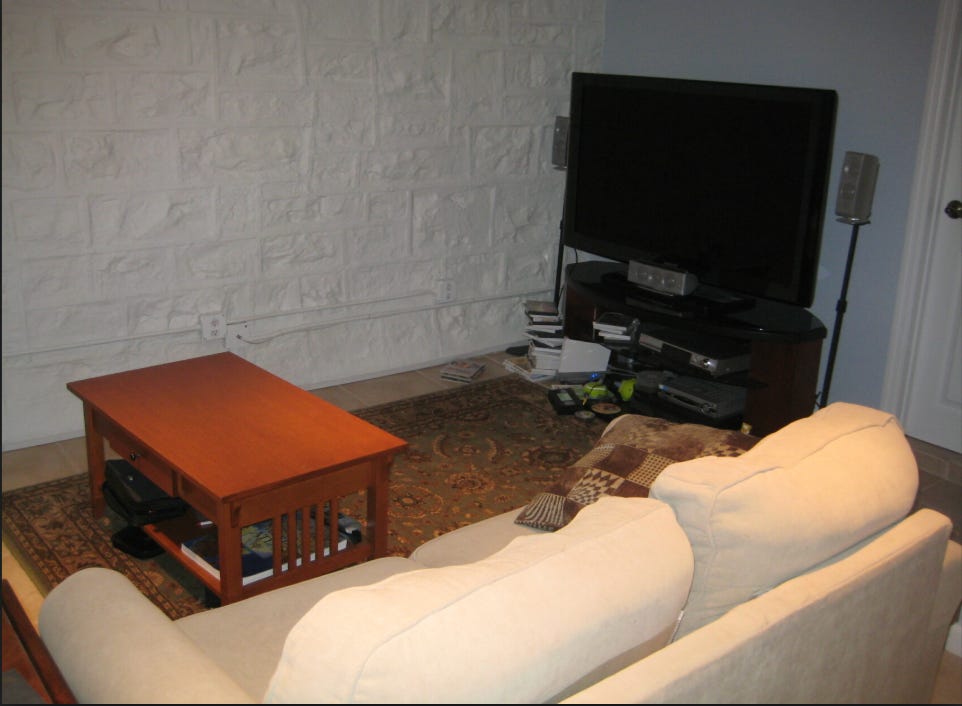
The purchase that I remember the most, however, was our new television. My mom put my dad in charge of it, as he’s always been the more tech-savvy one in the relationship. Her one request was that the new screen not “dominate the room.” Dad ignored this rule and chose the biggest one he could possibly cram into the space—a 52-inch dynamo that was grander than just about anyone else’s in the neighborhood. Mom hated it, and would tell any and all houseguests that the TV was absolutely not her idea. It was as if my sister and I had discovered fire again—only this time it had surround sound.
The renovated basement had decidedly less character than the old one. The new furniture was all sourced from big-box stores, and it had a slickness to it that felt a bit devoid of life. I didn’t care. It became the go-to hangout spot for me and my friends throughout middle school, high school, and even when I came home from college.
It was the nucleus of our home. We had family movie nights there every Friday or Saturday—the VCR upgraded to a DVD player we’d use to play the Netflix discs that came in the mail. Tornado warnings were common, and we’d often rush down to the basement when the sirens would start. My parents would grab our dog and cats along the way, then turn on the enormous TV. We’d huddle together and anxiously await the latest weather report as rain pummeled the windows outside.
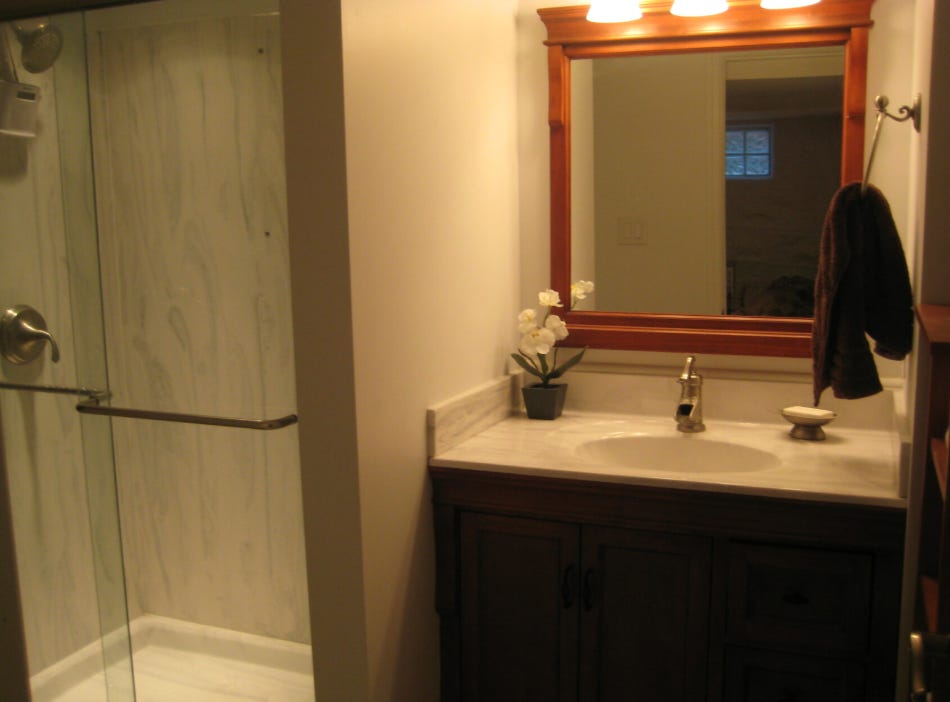
Our basement wasn’t the stuff of magazine spreads. Even after it was renovated, it had few trappings of luxury (beyond the giant TV). There were no vintage cocktail tables, no Murano glass sconces, no elegant candles or trays. It was where my dad showered in the morning, and where my mother did the laundry. It was simple; it was like countless others; and it was loved.
My parents, now in their 60s, are preparing to sell the house. Every time I call my mom, I’m confronted with evidence of the years we spent there. Can I part with my Nintendo Wii? When am I going to pick up more of the board games and take them back to New York? And how will I really feel when the house is no longer ours? The moment doesn’t feel as seismic as it did when they announced their plans to renovate all those years ago.
The space wasn’t supposed to be there forever—neither were its workaday furnishings or the room-dominating television. There’s a freedom in that. The pieces of the basement that I care about the most, I carry with me. I’ve learned to let go of the rest. ⌂
Helena Madden is a writer and editor based in Brooklyn. She has written about architecture and interiors for Robb Report and Elite Traveler, and she was the market editor at Elle Decor.
This is the third story from our 11th issue, themed “HOME ECONOMICS.”
Read the editor’s note here.
FROM THE ARCHIVE
PAST ISSUES
ISSUE 01: FINE, I’LL DO IT MYSELF ⌂ ISSUE 02: NO THOUGHTS, JUST VIBES ⌂ ISSUE 03: DON’T SIT ON THAT! ⌂ ISSUE 04: HOLIDAY SPECIAL ⌂ ISSUE 05: SWEATIN’ THE OLDIES ⌂ ISSUE 06: KITCHEN SINK ⌂ ISSUE 07: HACK JOB ⌂ ISSUE 08: OUT TO PASTURE ⌂ THE SHOE REPORT: MILAN DESIGN WEEK ⌂ A NYCxDESIGN CHORUS ⌂ ISSUE 09: GETTING WARMER ⌂ ISSUE 10: HOLDOUTS
How “Trading Spaces” Made Us Over

The rise of DIY TV wasn’t a fluke—it was an economic indicator. “Trading Spaces” designer Genevieve Gorder gives Wrong House a view from the inside. // By Sarah Archer